|
Welcome to the second edition of the EDU-LAB newsletter.
|
|
As we move into the second year of our Horizon Europe journey, we are pleased to share the latest research insights, regional progress, and upcoming milestones from across our European consortium.
|
|
|
|

|
A Note from the Coordinator |
|
Dear readers,
|
|
As we approach the second year of EDU-LAB, the project continues to build a solid foundation for new and enhanced knowledge about how the transition between education and the labour market is shaped for young peope. Over the past few months, partners across Europe have been actively engaged in dialogue, reflection and preparation for the next steps in our work. These joint efforts are helping us to refine our thematic focus, adjust the methodology and secure better integration of several research streams in the project pursued in various work packages.
|
|
The coming year will open up even more opportunities for collaboration and shared learning. Our teams are preparing for broader involvement of experts and the expansion of field research activities, which will allow us to capture diverse perspectives and experiences from our case study regions. We are also looking forward to upcoming meetings and exchange formats that will further support the overall devel-opment of the project.
|
|
I would like to thank all partners for their continued commitment and cooperation. Together, we are developing meaningful insights that will accompany the project as it moves into its next phase.
|
|
Warrm regards,
— Dr. Alexander Chvorostov (Project Coordinator)
|
|

|
Modelling Education and Labour Market Pathways |
|
Work Package 1 (WP1) lays the conceptual and analytical foundations for EDU-LAB by examining how young people move through education and training systems and enter the labour market. WP1 is led by the Evaluation Agency Baden-Württemberg (EVALAG), with Prof. Theodor Leiber coordinating the work. WP1’sfocus is on the structured and comparative mapping of educational pathways and transitions.
|
|
Developing a Structural Model of Pathways
|
|
Based on a narrative literature analysis and the synthesis of existing research, WP1 has developed a preliminary qualitative structural model of education and training pathways. This covers general education, vocational education and training, and transitions to the labour market. This model provides a high-level overview of how different educational pathways are connected and where key decision-making and transition points lie. It also forms a basis for integrating intersectional factors that influence access, participation, progression and successful completion within education systems. This initial model will be further refined in later project phases, including updates to reflect the most recent set of identified determinants and transitions.
|
|
|
|
Figure: Qualitative structural model of E&T pathways and transitions.
|
|
Mapping Transitions within Education and to the Labour Market
|
|
In parallel, a comprehensive set of transitions within education and training pathways and between edu-cation and the labour market has been identified. Drawing on document analysis, including CEDEFOP charts, this work distinguishes between legally regulated transitions within education systems and broader transitions such as moving between institutions, fields of study, countries, or employment statuses. This mapping supports the identifica-tion of data gaps and informs later analytical work by clarifying which transitions are covered by existing datasets. .
|
|
|
|
Figure: Set of transitions within education and training pathways and to the labour market
|
|
This mapping supports the identification of data gaps and informs later analytical work by clarifying which transitions are covered by existing datasets.
|
|
Next Steps
|
|
In the coming phases, the main effort will be continuing to refine both the structural models and the transition mappings and strengthening the analytical backbone that supports EDU-LAB’s empirical and comparative research.
|
|
|
|
Analysing Education and Labour Market Transitions through Data |
|
Work Package 3A (WP3A) aims to gain deeper insights into education and training pathways by analysing existing large-scale data sets. The goal is to better understand how young people navigate transitions within general education, vocational education and training, and the labour market, taking into account social, economic and political factors
|
|
|
|
Secondary data analysis of education and labour-market pathways
|
|
WP3A conducts in-depth secondary anal-yses of high-quality, freely accessible and scientific data sets covering countries in the European Education Area, with a particular focus on those countries that are also rep-resented in the project's case studies. These analyses examine how intersectional determinants – such as socio-economic background, institutional contexts and political frameworks – are associated with access access, participation, progression and successful completion of education and training pathways. This work builds directly on the conceptual foundations developed in WP1, ensuring a strong link between theoretical modelling and empirical evidence.
|
|
Building a strong data foundation
|
|
A key milestone achieved so far is the identification and structuring of 49 relevant datasets that form the general sample for the analyses in WP3A. Each data set was systematically checked in terms of structure, variables and metadata to ensure that it was suitable for the project's research questions. In addition, exploratory variable mapping was carried out to assess the extent to which existing data adequately reflect key determinants and transitions.
|
|
Current focus and next steps
|
|
In WP3A we are currently conducting in-depth analyses of the National Education Panel Study (NEPS) in Germany. This work tracks educational biographies across school, vocational and higher education phases, including transitions into the labour market and back into education and training, as well as patterns of re-entry. In the coming project phases, WP3A will extend these analyses to additional data sets and countries, thereby contributing robust empirical evidence to EDU-LAB's overall understanding of transitions from education to employment.
|
|
|
|
OSES-Delphi Progress: From Expert Voices to Structured Foresight |
|
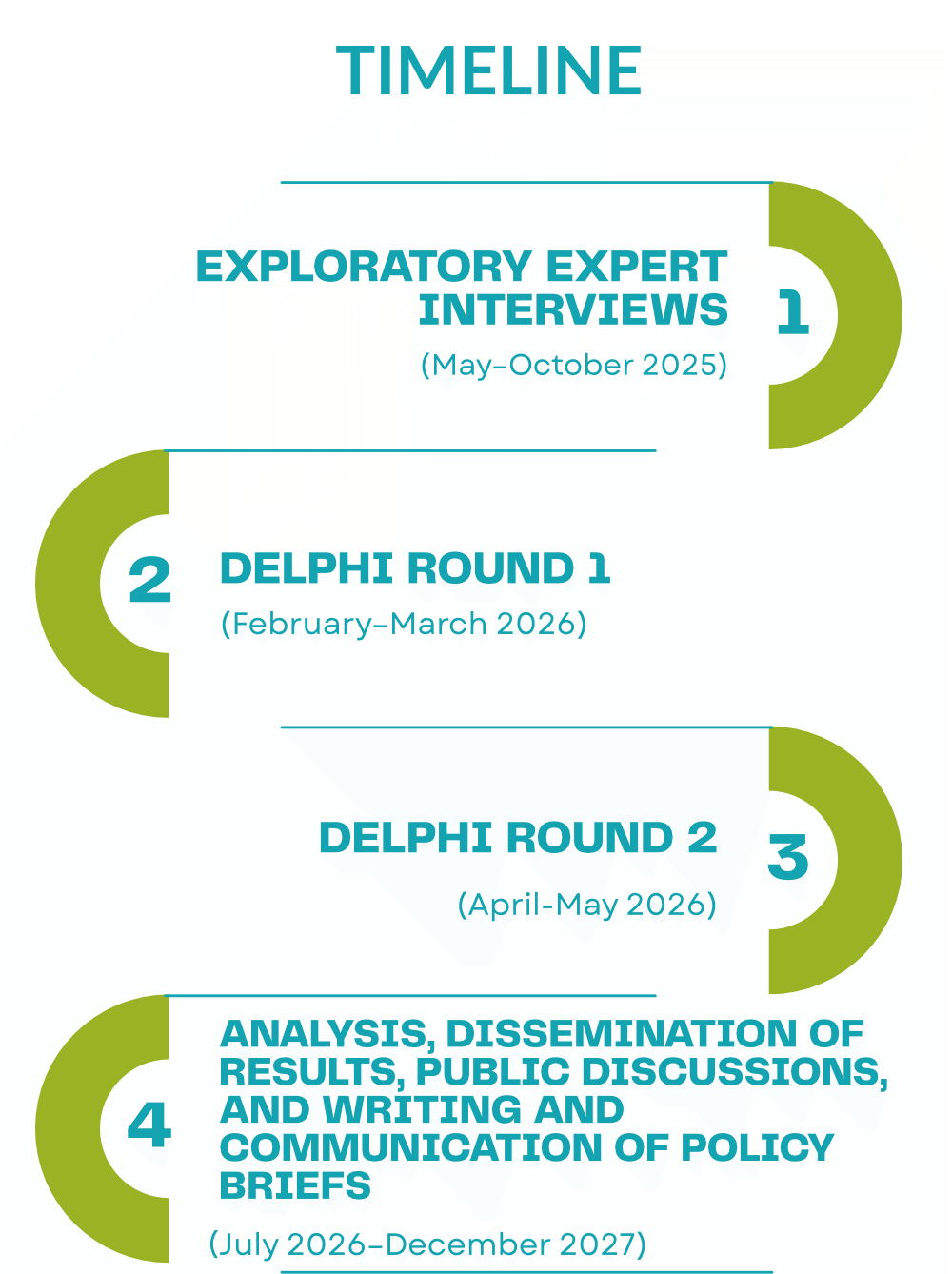
Work Package 3B (WP3B) made significant progress in 2025 by completing the qualitative basis for the online survey of experts and stakeholders (OSES). Through an extensive round of exploratory expert interviews (EEIs), the WP3B team gathered rich and context-sensitive insights that are now being incorporated into the preparation of a structured, Delphi-like online consultation. With the project transitioning into 2026, WP3B is preparing to launch the two-round OSES survey.
|
|
|
|
Exploratory Expert Interviews
|
|
Between July and October 2025, national research teams in all EDU-LAB countries conducted a total of 47 expert interviews. Those interviewed included specialists with expertise in education systems, labour markets, economic sectors, policies and governance on the transition of young people from education to the labour market. The interviews were conducted either in the participants' native languages or in English and lasted between 30 and 110 minutes. All interviews were recorded, translated and summarised according to a standardised procedure coordinated by Economica. This resulted in a consistent set of English-language based transcripts and summaries, which form the basis for further analysis.
|
|
Key themes emerging from the interviews
|
|
The interviews highlighted several recurring challenges that shape education and labour market transitions. Experts pointed to discrepancies between educational provision and labour market needs, limited availability of practical and workplace-based learning opportunities, and unequal access to guidance and support services. Digital transformation and the rapid development of new technologies were identified as both opportunities and risks, particularly in terms of skills gaps and unequal access. Social inequalities were frequently cited as a key factor influencing education and employment outcomes, as were governance challenges related to the coordination between institutions and policy levels. Many experts also emphasised the importance of motivation, agency and well-being for young people's education and employment trajectories.
|
|
From interviews to the OSES Delphi survey
|
|
The findings from the EEIs are currently being compiled into a series of thematic statements that will form the basis of the Delphi-like OSES survey. These statements will be evaluated by experts in terms of their significance, policy relevance and expected future development. The first round of the OSES survey is planned for early 2026 and will be followed by a second round, which will allow participants to reflect on aggregated group feedback and contribute to a structured collective foresight. In the coming months, the project will broaden expert engagement through the OSES Delphi survey, inviting structured reflection from a diverse group of stakeholders across Europe.
|
|
|
|
|
|
Hearing Young People's Voices: EDU-LAB Case Studies |
|
Work Package 4 (WP4) focuses on making young people's voices heard and placing their lived experiences at the centre of EDU-LAB's research. The main objective is to develop a deeper understanding of young people's perspectives and experiences in the areas of education, training and employment, drawing on their insider knowledge of decisions, educational and career paths, and transitions they have experienced so far. In addition, WP4 aims to co-construct solutions with young people that support participation and successful completion of education and training programmes and facilitate integration into the labour market.
|
|
|
|
A participatory, youth-centred research approach
|
|
WP4 is based on a qualitative case study design and follows a participatory research approach. Young people are not only considered as respondents, but as active contributors who help shape the research process. Right from the onboarding phase, the researchers and young people work together to build relationships based on trust, empathy and cooperation. The aim is for young participants to feel that their views and experiences are valued, that their participation is meaningful, and that their contributions can have an impact beyond the immediate research context. Researchers and young people jointly iden-tify the key challenges and dilemmas that young people face in their education, training and employment trajectories. The solutions developed jointly within WP4 focus on specific barriers and overlapping factors that hinder or facilitate young people's transitions. This collaborative approach aims to ensure that the results of WP4 re-main relevant and meaningful beyond the duration of the project.
|
|
Case studies across diverse European contexts
|
|
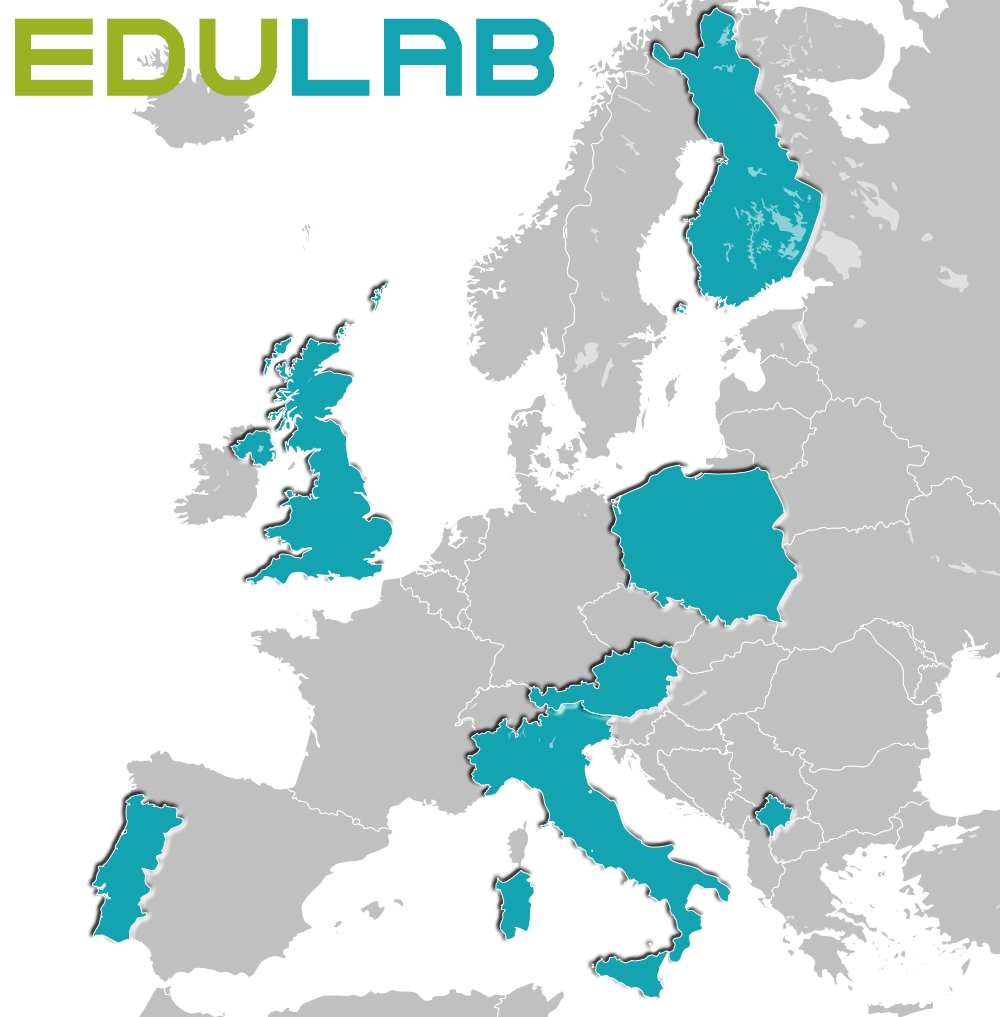
Data collection within WP4 takes place in seven European countries at a total of twelve locations and covers a wide range of education systems, labour market struc-tures and socio-economic contexts. The case study locations include Austria (Vien-na, Graz), Finland (Helsinki, Tampere), Italy (Bologna), Kosovo (Pristina), Poland (War-saw, Łódź), Portugal (Porto, Santarém) and the United Kingdom (Birmingham, Worces-tershire).
|
|
|
|
Figure: Map of EDU-LAB Case Study Location Countries
|
|
Methods and current progress
|
|
WP4 plans to involve 600 to 960 young people aged between 15 and 30, including those in education, training and employ-ment, as well as young people who are not in education, employment or training (NEET). Recruitment began in May 2025 and is ongoing. It is supported by local, trusted partners who facilitate access, onboarding and safe participation conditions. Data collection is carried out through focus groups, participatory workshops and week-ly structured diaries. The focus groups ex-amine young people's views, experiences and expectations regarding transitions in and to education and training, and the labour market. Participatory workshops bring together young people of similar ages to analyse challenges in their pathways to data and develop solutions together over several sessions. The structured diaries enable participants to reflect on their experiences over a longer period of time and in their everyday contexts. Data collection and analysis are carried out in parallel and will continue until autumn 2026. They provide a rich qualitative evi-dence base for EDU-LAB's overarching analytical and policy-related work.
|
|
|
|
|
Meet the Partners
|
|
EDU-LAB brings together a diverse consortium of research institutions, universities and policy-oriented organisations from across Europe. Each partner contributes specific expertise, data, and contextual knowledge that supports the project’s interdisciplinary and comparative approach.
|
|
|
|
AAB College (Kosovo)
|
|
AAB College is the largest non-public higher education institution in Kosovo, offering an extensive range of programmes across social sciences, medical sciences, linguistics, computer sciences, arts, and sports. Since its founding in 2000, AAB has focused on building strong academic capacity, promot-ing innovation, and strengthening its con-nections with the wider region.
|
|
|
|
Figure: EDU-LAB Kickoff Event in Kosovo
|
|
Within EDU-LAB, AAB plays a central coordination role across several Work Packages and leads the project’s case study in Kosovo. The team brings together expertise in education research, teacher development, curriculum design, and qualitative methodologies. Their long-standing experience in national education reform and international cooperation supports the project’s broader objectives of improving young people’s transitions from education to the labour market. The AAB team is led by Dr. Xhavit Rexhaj, an expert with more than 35 years of experience in higher education research, policy-making, and curriculum design. Together with colleagues Dr. Arbëresha Qerimi, Dr. Arbërore Bicaj, and Ereëza Mehmeti, the team contributes across methodological, analytical, and dissemination activities. Highly engaged in regional and international networks, AAB enriches EDU-LAB with strong local insights and a deep understanding of the challenges and oppor-tunities facing education systems in the Western Balkans.
|
|
|
|
|
|
AlmaLaurea (Italy)
|
|
The AlmaLaurea Interuniversity Consortium is a unique collaboration of 82 Italian universities, representing around 90% of graduates nationwide. As part of Italy’s National Statistical System, AlmaLaurea conducts large-scale annual surveys on graduates’ educational paths, skills, and employment outcomes, supporting evidence-based policy and institutional planning. In EDU-LAB, AlmaLaurea leads the Italian case study and contributes its extensive experience in graduate tracking, data management, and labour-market analysis. Their ability to produce reliable, longitudinal datasets offers valuable insights into young people’s study-to-work transitions and the factors that shape them across time. The team is coordinated by Prof. Marina Timoteo, full professor of Comparative Private Law at the University of Bologna and Director of AlmaLaurea. With long-standing experience in higher education research, international cooperation, and graduate studies, she oversees the consortium’s survey operations and strategic development. Researchers Dr. Dorel Manitiu and Dr. Luisa Mengoni bring additional expertise in EU-funded capacitybuilding projects, data analysis, and research management. AlmaLaurea’s contribution strengthens EDU-LAB’s comparative dimension and expands the project’s ability to interpret educational and labour-market trajectories across different socio-nstitutional contexts.
|
|
|
|
Project Facts & Engagement |
|
2025 Progress Snapshot
|
|
With the completion of the first project year, EDU-LAB has made steady progress in the areas of expert engagement, field research and consortium collaboration. This snapshot provides a brief overview of the status of the project at the end of 2025, while the accompanying infographic highlights key metrics and contextual indicators that define the scope of our work.
|
|
Over the course of the year, the project partners conducted a total of 47 exploratory expert interviews, gathering perspectives from a diverse group of stakeholders across Europe. Preparations for the first round of the online survey of experts and stakeholders (OSES) are underway and will serve to expand the network of experts and deepen thematic understanding. In parallel, initial activities have begun at twelve case study sites in seven countries, laying the groundwork for field research that will continue into 2026.
|
|
These activities are unfolding against the backdrop of a broader European landscape that continues to be characterised by per-sistent challenges in the transitions of young people. Recent Eurostat data show that 9.5% of young people leave school early, while 11.2% are classified as NEET (not in education, employment or training). At the same time, over 70% of employers report skills and competence shortages, underscoring the relevance of EDU-LAB's focus on equitable and effective transitions from education to employment. A visual summary of these developments and the upcoming project milestones for early 2026 can be found in the infographic accompanying this article.
|
|
|
EDU-LAB Engagement, Visibility, and Collaboration Activities |
|
In recent months, EDU-LAB has further increased its visibility and strengthened collaboration through active participation in several international conferences, scientific meetings and Horizon Europe cluster events. These activities supported the project's dissemination goals while promoting intensive exchange with researchers, policy makers and practitioners in Europe and beyond.
|
|
In July 2025, Dr. Filomena Parada, head of WP4, represented EDU-LAB at the biennial conference of the Society for Vocational Psychology (SVP) in Lausanne, Switzerland. Organised by the SVP, the European Society for Vocational Designing and the University of Lausanne, the conference was themed ‘Bridges in Vocational Psychology’.Dr. Filomena Parada presented EDU-LAB's qualitative case study design, which focuses on young people as active knowledge producers. Her contribution showed how the project combines the expertise of young people with academic research, thus going beyond traditional, adult-centred approaches to the study of educational and employment trajectories.
|
|
|
|
1 Society for Vocational Psychology (SVP) Conference, Lausanne
|
|
Early autumn brought a series of other impactful events for EDU-LAB. On 7 Novem-ber 2025, Dr. Alexander Chvorostov presented the project at the NEXT-UP cluster event at the University of Trento. The event brought together Horizon Europe projects funded in the thematic area of ‘Effective education and labour market transitions for young people’, including NEXT-UP, BRIDGE and VETPREP. The EDU-LAB presentation introduced the project objectives, methodological approach and initial progress, and contributed to a constructive exchange on synergies and future cooperation opportunities within the cluster.
|
|
In Kosovo, EDU-LAB gained additional visi-bility by participating in several scientific events. At the International Scientific Con-ference on Lifelong Learning (18–19 Sep-tember 2025), organised by the Kosovo Pedagogic Institute, Prof. Xhavit Rexhaj gave a keynote speech on challenges and opportunities in Kosovo's pre-school and school education system and presented the objectives and research design of EDU-LAB. Shortly afterwards, he took part in the MESTI scientific round table discussion on ‘Interdisciplinary Sciences in Kosovo’, where he emphasised the importance of research development and international networking. Prof. Rexhaj had previously represented EDU-LAB at the 11th International Workshop on Efficiency in Education, Health, and Other Public Services in Budapest, where he gave a presentation on systemic performance and moderated a breakout session.
|
|
|
|
2 International Workshop on Efficiency in Education, Health, and Other Public Services in Budapest
|
|
|
|
3 International Scientific Conference on Lifelong Learning in Pristina
|
|
From 1 to 3 November 2025, the AlmaLaurea Interuniversity Consortium participated in the “European Higher Education Week 2025 in Vietnam: Erasmus+ and Horizon Europe: new synergies between Europe and Asia for innovation and sustainable development”, held in Ho Chi Minh City and Hanoi. The event was organised by the European Union Delegation to Vietnam in partnership with the Ministry of Education and Training (MOET), the Ministry of Science and Technology (MST), and the Embassies of EU Member States in Vietnam. On 3 November, during the “Erasmus+ & Horizon Europe Day”, Dorel Manitiu, Project Coordinator of the International Relations Office, presented experiences from the EDU-LAB project in the session “Best practices from Erasmus+ and Horizon Europe projects”. The initiative gathered over 300 representatives from Vietnamese and European universities, research institutes, companies, and development organisations, strengthening cooperation in higher education, research, and innovation.
|
|
Overall, these activities highlight EDU-LAB's growing presence in the international research landscape. As the project enters the field research and analysis phases, contin-ued participation in such events remains crucial to strengthening collaboration, sharing new insights, and ensuring broad dissemination of the project results.
|
|
|
|
Recently Published Project Deliverables |
|
In the past reporting period, EDU-LAB pub-lished three key public deliverables that mark important milestones in the first year of the project. These results bring together conceptual, empirical, and policy-related work from several work packages and pro-vide a common analytical framework for the next phases of research, expert in-volvement, and synthesis. At the same time, they reveal key data and knowledge gaps that the project will address through ongoing quantitative analyses, the OSES Delphi survey, and qualitative case studies.
|
|
D1.1 – Set of data and information gaps about educational pathways and transi-tions and intersectional determinants (WP1)
|
|
This deliverable develops a structured overview of educational and training pathways as well as transitions into the labor market based on existing literature, data sets, and classification frameworks. It identifies key intersectional determinants that shape the educational and employ-ment trajectories of young people and highlights areas where existing data sources provide sufficient coverage and where significant gaps remain. The report establishes a conceptual and methodologi-cal basis for the subsequent empirical analyses within EDU-LAB.
|
|
D2.1 – Data and information gaps on how intended or non-intended effects have been achieved and why certain effects have not been achieved (WP2)
|
|
Based on a systematic analysis of policies, programs, and investments across Europe, this report examines the effectiveness and efficiency of policy measures to support young people's transition from education to the labor market. In addition to identify-ing key data sets and evidence gaps, it places a particular focus on unintended effects, governance challenges, and rea-sons why certain policy objectives were not fully achieved, thereby providing important impetus for further policy analysis and rec-ommendations
|
|
D5.1 – Methodological overview; draft out-line of the concluding book; drafts of Policy Briefs and Discussion Notes (WP5)
|
|
This composite deliverable brings together the first integrative results of the project. It outlines the methodological foundations and analytical structure of the future final volume and presents a first series of policy briefs and discussion papers that translate key findings from work packages 1–4 into accessible formats for policymakers, practi-tioners, and other stakeholders. It thus represents an important step toward syn-thesis and external communication.
|
All published deliverables are openly accessible on the project website: View Deliverables |
|
|
|
EDU-LAB in the Horizon Europe Landscape |
|
EDU-LAB is part of a wider group of Horizon Europe projects working on youth transitions, educational pathways, and labour market challenges. This brief overview highlights projects funded under the same Horizon Europe topic, as well as closely related initiatives where collaboration opportunities have already been identified.
|
|
Projects under the same HE topic
|

|
NEXT-UP
examines how the COVID-19 crisis has reshaped young people’s transitions from education to work. Using interdisciplinary and innovative methods, it works with stakeholders to co-create futureoriented, inclusive policies that support diverse youth groups.
|
|
BRIDGE
investigates how to improve participation and completion in upper-secondary and tertiary education. By analysing schooling transitions and policy effects, it aims to generate evidence-based recommendations that promote equity and high-quality learning opportunities.
|

|
VETprep
focuses on Vocational Education and Training systems in five European countries. It studies participation, retention, and the post-pandemic challenges facing VET, helping policymakers understand how to support diverse learners and reduce early leaving.
|
|
|
|
|
Thematically related projects
|
|
ISABEL
analyses how the green transition transforms labour markets, with a focus on uneven regional and social impacts. Using advanced data techniques and living labs, it explores pathways for fair reskilling, labour reallocation, and skills development in rapidly changing economic environments.
|
|
EFFEct
evaluates the efficiency and equity of education systems and policies across Europe. Through multidisciplinary approaches and evidence-based evaluations, it examines teacher development, learning environments, and targeted interventions, generating insights to improve educational quality and support diverse learners
|
|
|
|
|
|
Stay Connected with EDU-LAB
|
|
Follow the EDU-LAB project to stay updated on the latest research, results, and events as we explore youth transitions across Europe.
|
|
Economica Institute of Economic Research
Austria
National and Kapodistrian University of Athens
Greece
CeiED at Lusófona University
Portugal
Evaluation Agency Baden-Württemberg
Germany
Otto-Friedrich University of Bamberg
Germany
AlmaLaurea Interuniversity Consortium
Italy
|
|
Kolegji AAB
Kosovo
Birmingham City University
United Kingdom
Maria Grzegorzewska University
Poland
University of Graz
Austria
Tampere University
Finland
|
|
A Horizon Europe collaborative project (2025-2027).
Grant Agreement # 101177428.
Funded by the European Union. Views and opinions expressed are however those of the author(s) only and do not necessarily reflect those of the European Union or the European Education and Culture Executive Agency (EACEA). Neither the European Union nor EACEA can be held responsible for them.
|
|
|
|